![]() |
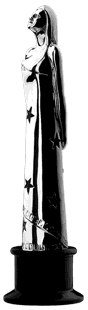
20 Premios Europa 1 de Diciembre de 2007 Berlín |
||||||||||||||||||||||||||||||
Eduardo Chapero-Jackson |
|||||||||||||||||||||||||||||||
Eduardo Chapero-Jackson |
|||||||||||||||||||||||||||||||
Cristian Mingiu |
|||||||||||||||||||||||||||||||
Palmarés completo por película El año que veine nos tocará el 6 de Diciembre en Copenague. |
|||||||||||||||||||||||||||||||
| Premios Europa al minuto Después de un breve recuerdo de los 20 años de Premios Europa, de aquel sueño hecho realidad de Wim Wenders, comienza la ceremonia con música en directo desde el Berlin Arena, una gran nave adecueada para el evento. FOTOS DE LA CEREMONIA EN FLICKR EN BREVE EL ENLACE AQUI MISMO En estos momento el presentador se pasea por las mesas intentando hablar algunos de los diferentes idiomas representados en los EFA de esta noche. Premio al mejor documental, también conocido hace ya algunas semanas. La actriz Isabelle Hupert entregó el premio en una imagen grabada hace algunos días, para tener el agradecimiento del director. Imágnes de las actrices ganadoras del Premio Europa, Maura, Watson, Bjork, Stauton.. están todas en este resumen fotográfico. Para presentar el premio de manos de Maria Grazia Cuccinota, y el tres veces nominado Maks Mikkelsen. PRIMERAS IMAGENES EN FLICKR www.flickr.com/photos/jordi79bcn Ahora le toca el recuerdo a los actores ganadores Brühl, Benigni, Kinsey, Castellitto, Sergi López... así se prepera la entrega al Mejor Actor La actriz italiana, antes de salir del escenario, deja un anuncio en contra del hambre infantil que ella misma protagoniza. Y seguimos con un poco más de música para dar aire a la ceremonia. Nuevos premios, el de Eurimages, que premia a las coproducciones, este año, para comenzar fuertes, han entregado dos premios. Uno de los ganadores dice que no seamos modestos, una película puede cambiar el mundo, de manera que los cineastas todavía pueden encontrar más razones para politizar más de lo sensato algunas de las películas que realizan, protagonizan o promocionan. El presentador dice que ahora hay 61 paises ofreciendo esta ceremonia en directo... quizá son países que tienen los derechos comprados, en pocas ocasiones se ha ofrecido esta ceremonia en director. Normalmente va en diferido y más recortada, a pesar de que a penas dura dos horas. Mejor Director Cristian Mungiu por 4 meses, 3 semanas y 2 días, una de las películas que partía como favorita de la noche acaba de llevarse uno de los premios más grandes. Muestra de todos os premios que se entregan en Europa, Donatello Goya, Lola, César, Bafta... y otros menos conocidos. Sale Juanjo Puigcobé a presentar el Premio Descubrimiento, recuerda que el primero que lo recibió fue para Mujeres al borde de un ataque de nervios. Y repasan algunos de ello. Vuelve a aparecer Wim Wenders en el escenario para recordar a Ingmar Bergman, fallecido este verano, y uno de los que más apoyó la creación de la Academia de Cine Europea en sus inicios, llegando a ocupar el máximo escalafón en algunos años. Sin olvidar por supuesto todo lo que él fue capaz de realizar por el mundo del cine a través de su spelículas. Liv Ullman presenta La Piedra que Bergman deseaba que fuera un premio para el cine. Hoy entregan 10 de ellas esta noche. Para diez veteranos cineastas. Si no pudo ser en vida, lo es en memoria. Entre ellos por supuesto el nonagenario Manoel de Oliveira, que recibe un premio sorpresa especial. 65 años de profesión en el cine, además de la piedra un más que merecido Premio Europa ha conseguido que todos los comensales del Berlin Arena se pongan de pie para aplaudirlo como se merece este buen portugés, más prolífico que Allen pero menos reconocido. Dice que no ha comprendido casi nada, porque no entiendo mucho el inglés pero que le parece algo extraordinario. Dice que seguirá trabajando con fuerza para dar ejemplo a los jóvenes, y se gira como si se dirigiera a los veteranos que están con él en el escenario, y comenta que los jóvenes le preguntan si sigue, que no para. Wenders dice que el día 11 de Diciembre, en 10 días, es su compleaños y que recibirá muchos, muchos telegramas. Entonces Oliveira se anima a decir unas palabras en inglés "TANK YOU THANK YOU VERY MUCH" Suena Delaila Premio a la Excelencia, ese premio que se entrega a alguna de las categorías que en el resto de Academias tiene su apartado propio, y unica nominación de una película esañola en las categorías de largometraje. Supustamente estar nominado en esta categoría que engloba todas, significa que eres el mejor en la categoría por la que estás nominado. Ahora queda elegir el mejor entre los mejores especialistas. A pesar que poco se puede comparar entre un editor de sonido, un montador, un maquillador o una peluquera. El Perfume Mejor Diseño de Producción, la recreación de París en las calles de Barcelona otorgan este premio a una adaptación que creó más expectación en su rodaje que en su estreno. Una de las categorías que ha conseguido escapar a la Excelencia es la de fotógrafo. Queda poco para acaar ya la ceremonia, nos comentan, a pesar de que es una de las más largas, ya supera los 135 minutos cuando se llama a Christopher Doyle y no apaece en escena y hace n intento de cantar con la banda, pero está realmente para entregar un premio. Aunque es una manera muy poco ortodoxa de hacerlo. Felicitaciones de Martin Scorsese para uno de sus mejores directores de fotografia Michael Ballhaus que ha recibido esta noche el Premio Especial por la contribución del cine euqopeo de manera internacional. La sala después de las palabras de Scorsese se pone de pie, por segunda vez en la noche, a pesar de no haerlo en la primera ovación, ni tampoco cuando han aparecido sus estudiantes en el escenario. Solo queda el Premio a la Mejor Película y Jean Moreau sube a entregarlo, recibiendo otra ovación, la tercera de la noche. Dice que es una noche importante, que muchas cosas han pasado esta noche. Mejor Película Europa del 2007 4meses, 3 semanas y 2 días. La favorita del año, a pesar de no ser la que más nominaciones ha conseguido, se ha llevado dos importantísimos premios, el de Película y el de Director. |
|||||||||||||||||||||||||||||||
Entrevista a Wim Wenders (Realizada por la EFA / En breve traducción al castellano) On December, 1st the European Film Academy will celebrate in Berlin the 20th edition of the European Film Awards. Can you recall some of the most memorable moments of the first ceremony? Wim Wenders: At that period of history, in November 1988, when we were gathering for the first time in Berlin, we were overwhelmed with emotion witnessing this fantastic gathering of friends and some of the most outstanding colleagues who had come together – from North and South and – even more importantly - from East and West. In the political context of a still divided continent (and in a devided city) it was extremely moving when Nikita Mikhalkov spontaneously ran on stage with a bag full of Russian caviar and gave it to Curt Bois who was just about to make his acceptance speech after being presented with an award for his supporting role in “Wings of Desire”. We had tears in our eyes, when the Georgian director Sergej Paradjanov – also completely unexpectedly – appeared on stage to give his personal amulet to the Italian actress Giulietta Masina, Fellini’s wife, who was honouring Marcello Mastroianni for his body of work. And then there was this moment that was recalled so often in conjunction with the European Film Awards 2006 in Warsaw, the first ceremony ever held in Central/Eastern Europe: When Krzysztof Kieslowski received the Award for the Best European Film in 1988, he said: “I hope Poland is part of Europe”. This sentence symbolizes so well how much Europe has changed. Believe me: We filmmakers from all over Europe – being all gifted with a talent for imagination -, we would never have envisioned in our highest dreams how different our continent would present itself today, in 2007, when we are celebrating the 20th ceremony! During the first ceremony, István Szabó announced on behalf of his colleagues that you had decided to found a European Film Academy. How and why was the idea born? WW: It was so obvious that something had to be done to support European cinema. It had found itself in a deep crisis in the late eighties. The audience had somehow lost confidence in our movies – and we, the filmmakers, had lost confidence in ourselves. We had to oppose something to the rapidly growing power of Hollywood, but we knew: blaming “the others” would be the wrong way. WE had to rediscover our own entertaining qualities; WE had to understand that auteur cinema did not mean making films for ourselves; WE had to learn how to make local films appealing again for a European audience. So the idea for the European Film Academy was born, with the aim to support and promote European cinema and to pass on our experience to the younger generation. In short: to take responsibility for our contribution to European culture. Who were the driving forces behind this idea beside you? There are three people to be mentioned – and to be thanked, because without their political support, without their artistic and intellectual input there would not be a European Film Academy: Volker Hassemer, Berlin’s Senator for Culture at the time who put all his political power and energy in gathering the European industry in Berlin to celebrate for the first time European cinema during a European Awards ceremony; my colleague István Szabó who until today has committed his European spirit to the Academy – it was him who formulated the Appeal of European Directors that was signed by 14 directors including Angelopoulos, Bergman, Fellini and others and became the Credo of our association; and – last but certainly not least – Ingmar Bergman, our first president, and a hero for many of us. Europe underwent so many changes during these 20 years. Can you describe the impact of these developments on the history of the Academy and the Awards? Well, in the first years we had to deal with just around twenty film producing countries. By today, these have more than doubled. This is also the reason why we gave up ten years ago the jury system and the national selection committees and replaced these by more democratic procedures. Nowadays, everybody in the European film industry can submit a film for the European Film Awards and the EFA members are voting for both, the nominees and the winners. ”Think European!” - this is what we want to achieve with our members, “Fight for films with a European potential and leave national thinking behind you!” Today, in the 20th year, I can say, we’ve made a huge step forward. What do you think are the greatest achievements of the European Film Academy? First of all: building bridges – between the industry and the talent. We are not lobbyists for interests of only one group - we are giving a European home to all sectors of filmmaking! Second: living diversity - and enjoying it! Whoever has attended our Awards ceremonies has enjoyed the unique atmosphere of big multi-cultural family gatherings, the conspiracy of people that feel united by curiosity and a passion for storytelling. Third: offering a constantly growing platform for the promotion of our films. This year, the Awards ceremony will be broadcast in 60 countries in Europe and beyond. This is, indeed, a major achievement, as it gives the audience in 60 territories the possibility to discover the rich diversity of European cinema! Where do you see the European Film Awards in 20 years? Thinking of how much our world has changed during the past 20 years, this is very difficult to predict, but let me say it like this: In 1988, when it all started, there were no internet, no mobile phones, and the digital revolution was at its beginnings – not to talk about the political situation. Whatever the world, whatever cinema will be in 20 years, we all know that in every change, there is a challenge and in every challenge there is a chance to win. We have to keep our eyes open, we have to learn and we have to keep alive our ability of re-inventing ourselves from time to time. And in all that we shall never forget our cultural and social responsibility in protecting and promoting our film culture. The European Film Academy, the European Film Awards will play an important role in this development and this role will continue to grow. We are ready to take up the challenge! |
|||||||||||||||||||||||||||||||
Nominaciones y Premios
|
|||||||||||||||||||||||||||||||
Conferencias Premios Europa La migración de las películas - Quiere mostrarse como desde los años 80 muchos cineastas han tomado la migración como uno de sus temas, con la segunda generación de inmigrantes. Con la importancia del cambio y la mezcla de culturas. El Cinema beur de Francia, los hindúes y paquistaníes en Gran Bretaña o los turcos en Alemania son tres ejemplos. Conversación entre Stephen Frears y Peter Cowie, moderada por el productor Cedomir Kolar. En tres mesas se mirará como el cine puede conseguir mostrar una identidad cultural con la ayuda de la imagen. Moderarán los periodistas Thierry Chervel y Rainer Traube y la antropóloga Urmila Goel, con la presencia de los cineastas Züli Aladag, Gela Babluani, Neco Celik, Abdellatif Kecchiche y Jocelyne Saab. Les acompañarán otros expertos, la diseñadora Katja Fuhrmann, el sociólogo Paul Scheffer, el parlamentario europeo Daniel Cohn-Bendit y el director del Colegio Berlin's Rütl Aleksander Dzembritzki que no pueden hacer frente a la violencia diaria. La Conferencia EFA está organizada por la asociación con FFA German Federal Film Borrad y Medienboard Berlin-Brademburgo GMBH. Con patrocinio de Hauptstadtkulturfonds Berlin, Stiftung Deutsche Klassenlotterie Berlin, Babylon-Mitte, Centre Nationale de la Cinématographie, Jaguar, Land Rover, Liros, TNT y signansight.com. |
|||||||||||||||||||||||||||||||